Skip to content

Sheet 02 · Project index

the build log.

Each project gets details on what it is, what it’s made of, how it was made, and an objective fun rating.

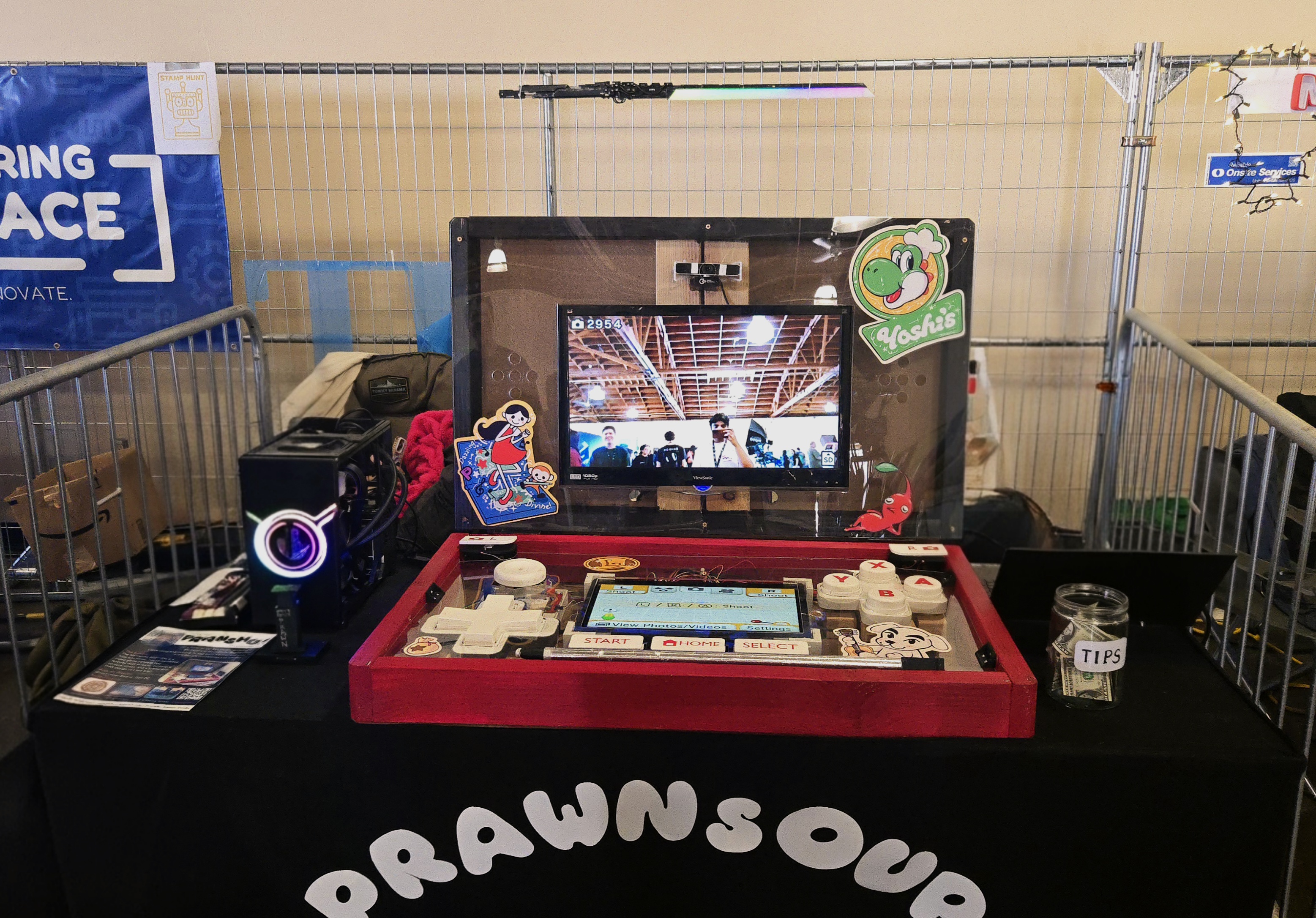
A large-scale 3DS-inspired build with dual displays, physical buttons, and a custom enclosure on a desk setup.Fig. PN-006
PN-006Personal

Nintendo 3DS 3XL

A 50x scale fully functional 3DS with working dual displays, touchscreen input, camera functionality, physical controls, and playable games.

Year
2026
Fun factor
Bill of materials
PLA and PETG · Dual LCD panels · USB communication · Custom controllers · 3D printed shell
Process
Fusion 360 → 3D printing → Electronics integration → Embedded controls
Status
Selected for Open Sauce 2026

Selected as one of 500 exhibitors at Open Sauce 2026, I designed and built a 50x scale fully functional 3DS featuring working dual displays, touchscreen input, camera functionality, physical controls, and playable games.

  • The hard part: making the whole experience feel tactile and believable, not just technically functional.
  • What I learned: display interfaces, USB communication, and input mapping all need to be treated as part of the mechanical system.
  • Showcase: a large-format build designed for a festival audience, not just a bench prototype.
A custom Arduino-driven flight simulator input rig built for haptic feedback and realistic motion cues.Fig. PN-008
PN-008Personal

Arduino '4D' Flight Simulator

A flight simulator rig that translates Microsoft Flight Simulator telemetry into haptic feedback using C and Python with an Arduino.

Year
2025
Fun factor
Bill of materials
Arduino · C/C++ · Python · Custom signal interface · Haptic hardware
Process
Embedded programming → System integration → Telemetry mapping → Prototype testing
Status
Sim feels real

Wrote a system in C and Python to interface Microsoft Flight Simulator 2020 with an Arduino for haptic feedback generation, turning simulator data into physical cues that make the experience feel more immersive.

  • System design: bridge software telemetry with physical hardware response.
  • Build work: tune response timing so the rig feels useful rather than distracting.
  • Why it matters: this is the kind of project where prototyping quality matters more than raw complexity.
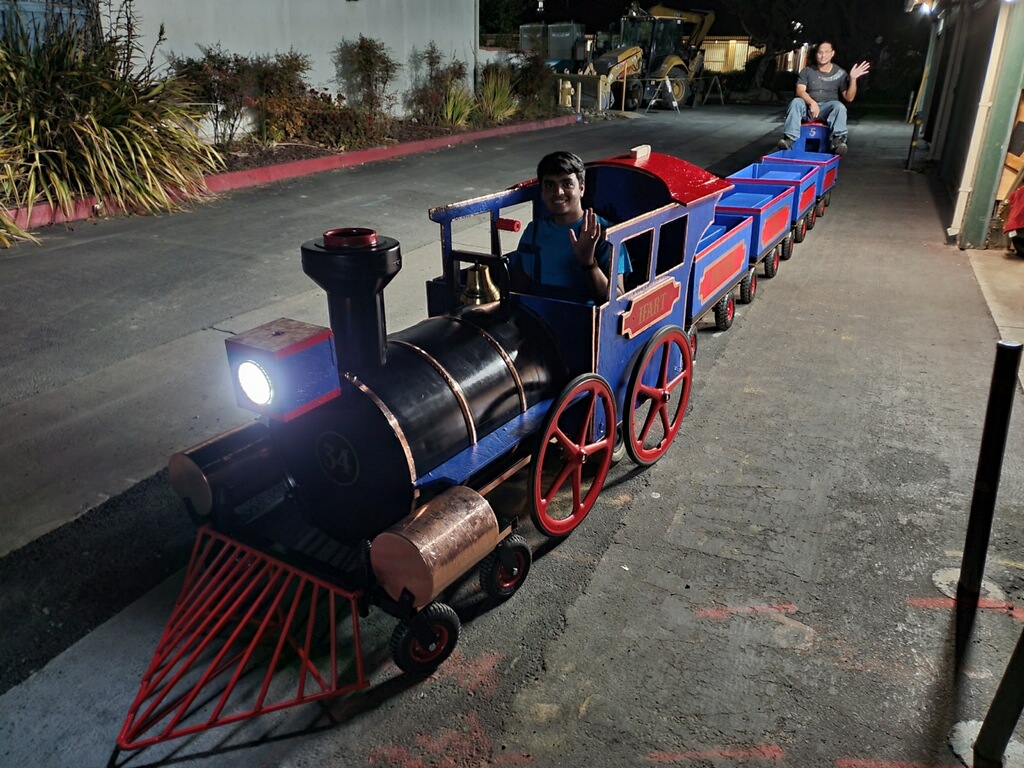
A large battery-powered trackless train designed for a public maker exhibit, showcasing automation and flight-simulation-inspired design cues.Fig. PN-009
PN-009Personal

Maker Faire Bay Area trackless train

A battery-powered electric 12-person trackless train designed for Maker Faire Bay Area and recognized with Editor’s Choice.

Year
2023 – 2025
Fun factor
Bill of materials
Battery power system · 3D printed structure · Custom controls · Mechanical drivetrain
Process
CAD → 3D printing → Bench testing → Public demo iteration
Status
Editor’s Choice exhibit

Designed and built a battery-powered electric 12-person trackless train for Maker Faire Bay Area, showcasing 3D printing, automation, and flight simulation-inspired design ideas in a public-facing build.

  • Public build: a project that had to be safe, reliable, and entertaining in front of a live crowd.
  • Scope: combined mechanical design, electronics, and demonstration thinking into one cohesive prototype.
  • Recognition: received “Editor’s Choice” at Maker Faire Bay Area 2025.
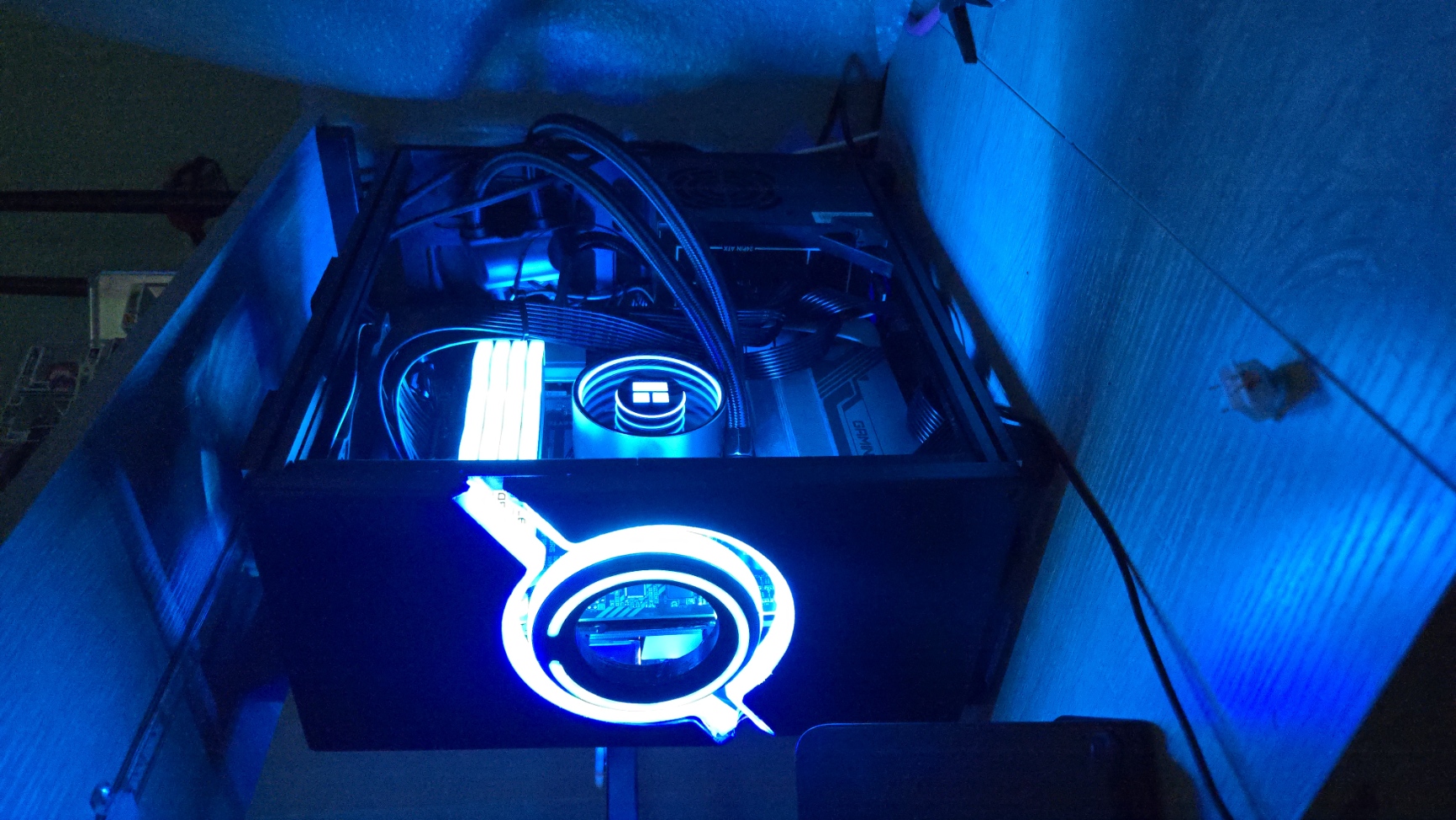
An open-air custom PC build with 3D printed components, aluminum extrusions, and a visible motherboard with programmable RGB lighting.Fig. PN-010
PN-010Personal

Custom Open-Air SFF PC Build

A custom 3D-printed open-air small-form-factor PC with aluminum extrusions, multi-material fabrication, and programmable ARGB lighting.

Year
2025
Fun factor
Bill of materials
3D printed enclosure · Aluminum extrusions · ESP8266 · Custom ARGB lighting · Open-air chassis
Process
Fusion 360 → Multi-material fabrication → Electronics integration → Iteration and testing
Status
Built and running

Designed and fabricated a custom 3D-printed PC enclosure in Autodesk Fusion with multi-material components and aluminum extrusions, then integrated an ESP8266-based communication path and programmable ARGB lighting.

  • Fabrication: custom enclosure with multiple 3D printed parts and structural extrusions.
  • Electronics: turned the system into a polished, visible build instead of a hidden reference rig.
  • Outcome: a functional desktop with a custom aesthetic and a clear focus on design-forward integration.
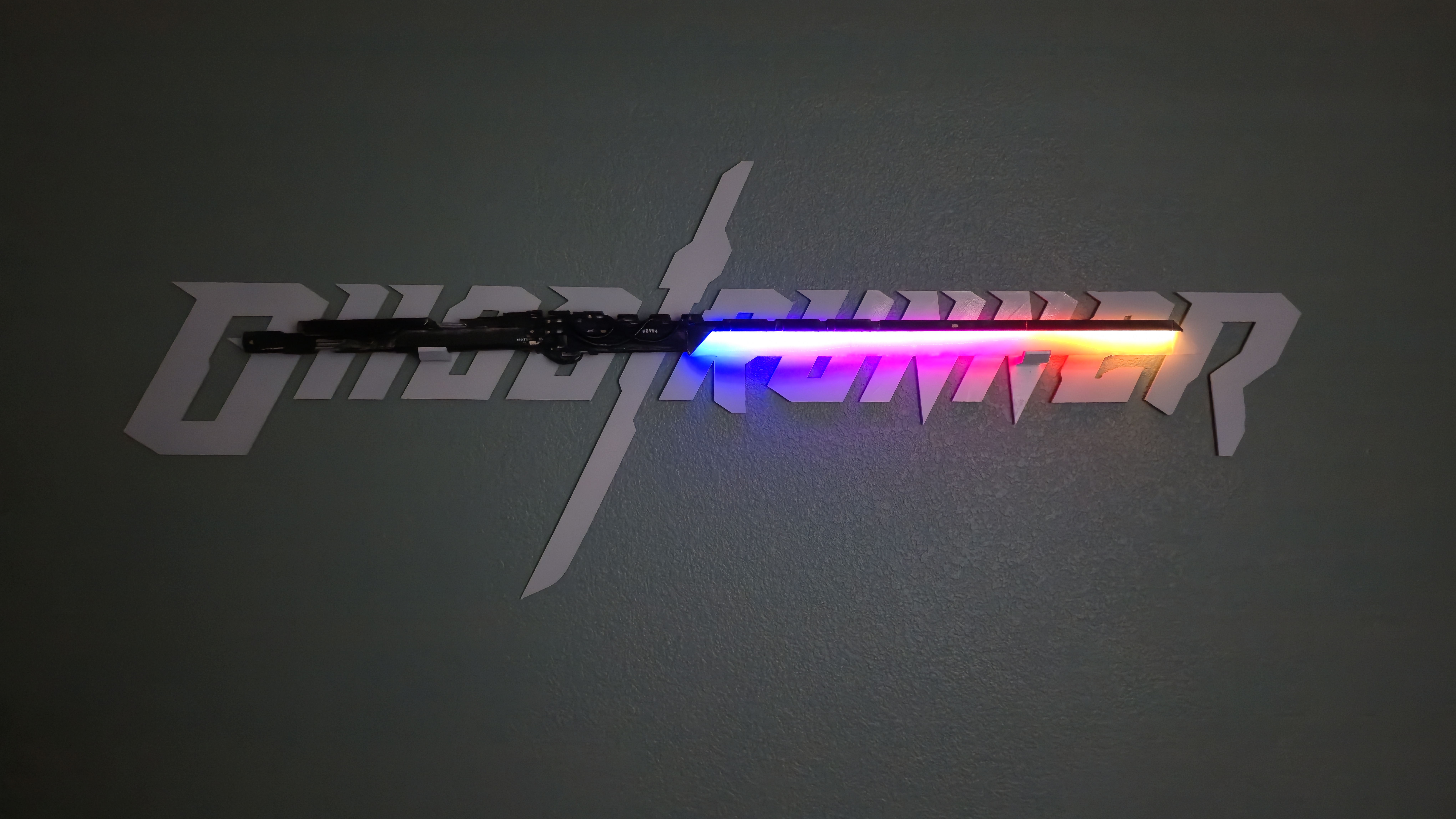
A 3D-printed GHOSTRUNNER sword with a worn metallic finish and RP2040-enabled lighting effects, designed for cosplay and display.Fig. PN-012
PN-012Personal

GHOSTRUNNER Sword

A 3D-printed sword inspired by the Chrome Izanami from GHOSTRUNNER, designed for cosplay and display.

Year
2026
Fun factor
Bill of materials
PLA filament · RP2040 microcontroller · ARGB LEDs · Custom mounting hardware
Process
CAD design → 3D printing → Post-processing → Soldering and Integration → Assembly
Status
Built and Displayed

Designed, modeled, and built a 3D-printed sword from scratch using Blender. I integrated RP2040 control, ARGB LED lighting, and custom animations to match a reference design.

  • Design work: created a complete sword from the ground up, from structure to electronics layout.
  • Control loop: tuned the behavior so motion and lighting output felt intentional rather than bolted on.
  • Takeaway: good prop making is as much about attention to detail and integration as it is about the final product.
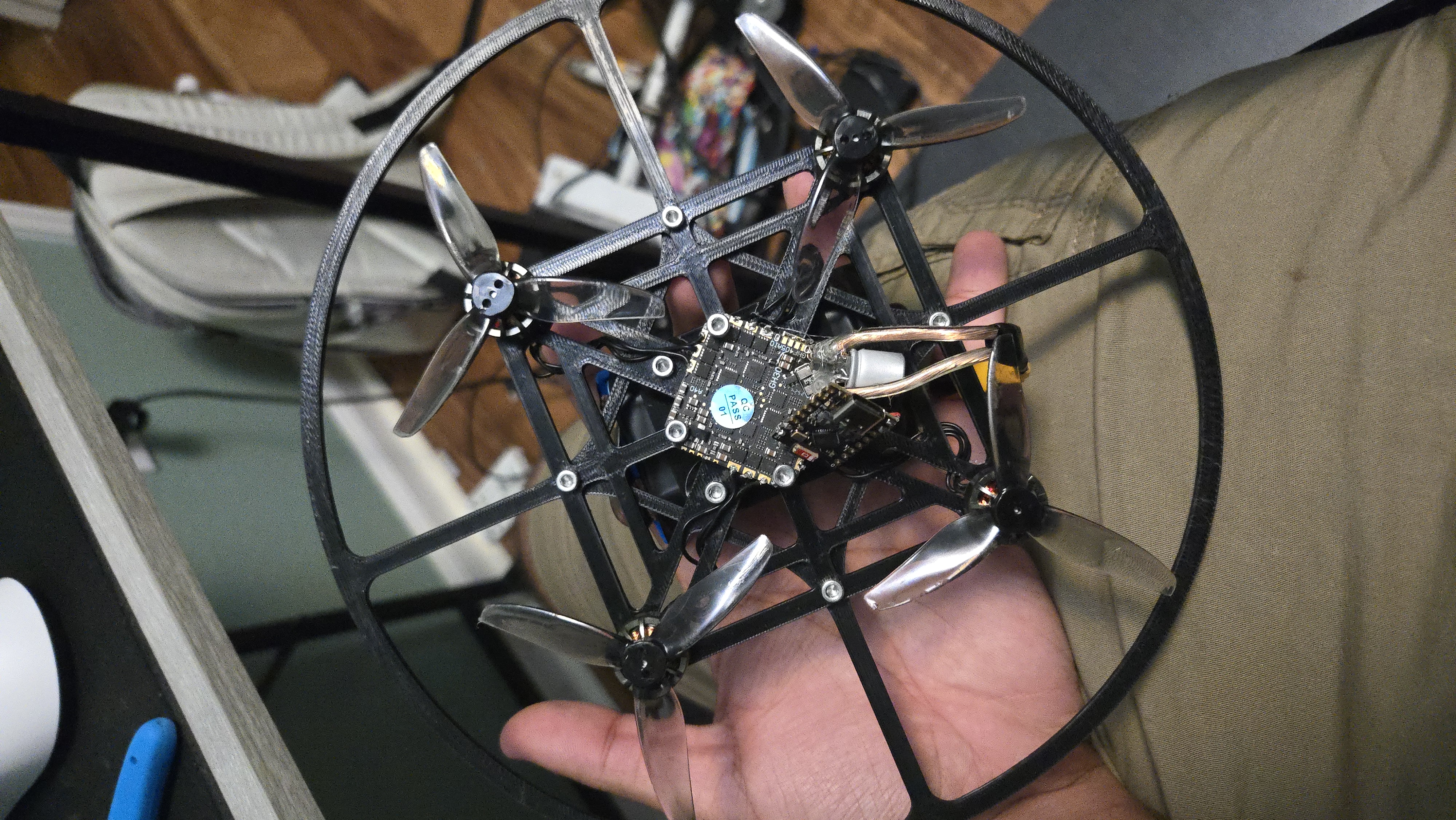
A custom quadcopter build with a 3D printed frame, integrated electronics, and a control screen mounted on the body.Fig. PN-007
PN-007Personal

Hovering Companion Drone

A custom four-bladed drone designed from scratch with ESP32 control, ESC communication, and screen-driven motion cues.

Year
2025
Fun factor
Bill of materials
3D printed frame · ESP32 · ESCs · Custom controller electronics · Display panel
Process
Autodesk Fusion → 3D design → Embedded control → System tuning
Status
Prototype in Progress

Designed, modeled, and built a four-bladed drone from scratch using Autodesk Fusion. I integrated ESP32 control, ESC communication, and custom screen animations and motor movement to match a reference design.

  • Design work: created a complete drone from the ground up, from structure to electronics layout.
  • Control loop: tuned the behavior so motion and screen output felt intentional rather than bolted on.
  • Takeaway: good mechatronics is as much about timing and response as raw power.
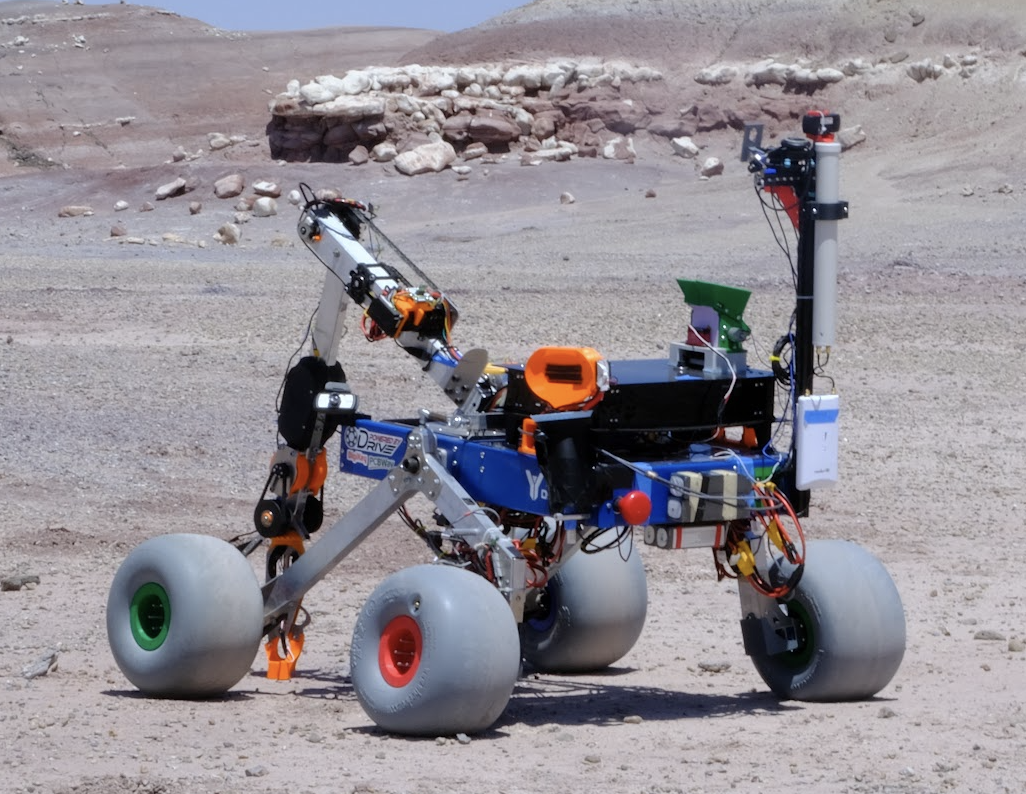
Yonder Dynamics' Contingency RoverFig. PN-111
PN-111Team

Yonder Dynamics

UC San Diego's student rover robotics team, consistently top performing in the annual University Rover Challenge.

Year
2026
Fun factor
Bill of materials
-
Process
CAD → 3D printing → Electronics prototyping → Documentation
Status
In Progress

Contribute to UC San Diego's student rover robotics team, Yonder Dynamics, which consistently performs at the top of the University Rover Challenge. The team focuses on designing and building autonomous rovers capable of navigating challenging terrains and completing complex tasks.

Subsystem: Arm Refinement